Showing posts with label News-Track. Show all posts

Thursday, March 15

News Track, March 2012 :: Hospiad

  1. Curing Our Hospitals: India's healthcare system faces the important and often competing challenges of expanding access, ensuring affordability and guaranteeing quality. As matters stand, small private hospitals, clinics, pharmacists and quacks are the mainstays of healthcare provision in both urban and rural centers. The renewed focus and increased spending by the government to revamp the public sector health delivery system may tilt the balance back towards public sector healthcare, but a large structural shift in healthcare-seeking behavior is usually very slow and cumbersome. Read More.
  2. Health Sector Reform in India: IT would require a very brave person to argue that India has a functioning health care system. The country’s health sector has been the topic of several screaming headlines in the media in recent months. As horror stories of scandals, scams and denial of health care continue to make headlines, it is clear that a deep malaise affects the system. Read More 
  3. Visa Norms a bitter pill for Medical Tourism: Some 40 policemen landed up at the Apollo Hospitals on Greams Road recently to check whether their 100-odd foreign patients undergoing treatment at the hospital had valid visas. While some patients were uncomfortable and embarrassed, the hospital management was upset. Read More
  4. NRHM to become National Health Mission:To ensure universal access to free generic essential medicines in public health institutions in time-bound manner. The government proposes to convert the National Rural Health Mission (NRHM) into a National Health Mission to provide health care to the urban poor also, in the course of the 12th Plan. Read More
  5. Higher health spend should reach rural centers: CHENNAI: Ever since the Prime Minister announced that plans were afoot to increase India's health care spend from less than one per cent of the GDP to a sizable 2.5 per cent, stakeholders in the public health setup have been cheerful. Not only will this increased spend reflect in better infrastructure in public health services, but it will also ensure more jobs, focus on medical research and hopefully, better salaries. "It is good that India has finally woken up to the challenge of having a strong public health sector. The UK, USA and even smaller European nations have built a very strong public health system. The only way this kind of a disease burden can be tackled is by getting people to come for subsidised health care," said the retired Dean of a premier medical college here. Read More
  6. India plans big jump in health-care spending, wants free medical services for all: New Delhi - With its health-care system increasingly eclipsed by rivals, India has a plan to nearly double public spending on health over the next five years, with the goal of eventually making medical care free for all Indians. It is an ambitious goal, and the kind of investment many experts have been advocating for decades. But already critics are wondering if the government will live up to its promise, or if throwing money at the problem without reforming the health-care delivery system from top to bottom will make much of a difference. Read More
  7. ‘In India We See a Huge Opportunity and This Tie-up with India is an Important One’: Recently, Dr Yves Bolduc, Quebec’s Minister of Health and Social Services, visited India with his team comprising some 40 representatives from Quebec’s business, research and health sectors to stimulate the forging of business partnerships with India. The visit also aimed at establishing an ongoing collaboration with India in the area of public health. As a step towards that the Government of Maharashtra and Government of Quebec signed a joint declaration for cooperation, in health and social services in telemedicine. Raelene Kambli in a tete-a-tete with Dr Bolduc finds out more about Quebec’s plans with India. Read More
  8. Economic Survey: Spurt in public spending on healthcare reaping dividends: NEW DELHI: Increased public spending on health seems to be finally reaping results with accessible, affordable and equitable healthcare gradually becoming a reality for the country's most backward and rural population. According to the economic survey presented by finance minister Pranab Mukherjee on Thursday, the combined revenue and capital expenditure on medical and public health, sanitation and family welfare has increased from Rs 53,057.80 crore in 2006-07 to Rs 96,672.79 crore in 2010-11. Read More


Regards

Hospital Administration Made Easy

Subscribe to this blog via e-mail from the right panel, or click here to subscribe to free RSS updates so that you do not miss out anything that can be valuable to you and your hospital!
Also, we would love it if you would provide us some feedback and leave a comment below.

Tuesday, August 9

News Fast-Track, Sep 2011:: Hospiad


  1. For New and Improved NRHM:
    • The National Rural Health Mission (NRHM) has been described as one of the largest and most ambitious programmes to revive health care in the world and has many achievements to its credit. It seeks to provide universal access to health care, which is affordable, equitable, and of good quality. It has increased health finance, improved infrastructure for health delivery, established institutional standards, trained health care staff and has provided technical support. It has facilitated financial management, assisted in computerisation of health data, suggested centralised procurement of drugs, equipment and supplies, mandated the formation of village health and hospital committees and community monitoring of services. It has revived and revitalised a neglected public health care delivery system. MORE
  2. IBM India Announces Shared University Research (SUR) Awards:
    • New Delhi: IBM (NYSE:IBM) today announced prestigious Shared University Research (SUR) awards for different Smarter Planet projects in collaboration with five leading educational institutes of India - IIT Bombay, IIT Delhi, College of Engineering Pune (CoEP), Yashwantrao Chavan Maharashtra Open University (YCMOU) and PSG Tech, Coimbatore. The award, totaling U.S.$250,000, will include technical collaboration with IBM experts, access to IBM software and high performance computing required for the successful completion of projects related to healthcare and education. MORE
  3. "Binary Spectrum" to present - Technology and Innovation in Public Health- at Next Generation Healthcare Informatics Conference 2011 :
    • (openPR) - Binary Spectrum proudly announces its participation in the Next Generation Healthcare Informatics Conference 2011 wherein the CEO would address the audience on “Technology Innovations in Public Health”. The Conference is being organized by IQPC and is being held in New Delhi, on the 18 and 19th of October, 2011. The event is being endorsed by the Technology Development Board, Department of Science and Technology, Ministry of Science and Technology, Govt. of India. MORE
  4. Tele-medicine gives medical aide over phone at all corner of the world:
    • Can the best medical practitioners be available at every corner of the country? Certainly not. But thanks to telemedicine, their consultations can now be availed oversees and in the rural nooks too. To this end, IT should be integrated in every aspect of healthcare. MORE
  5. Bring Trauma Center into operation soon:
    • KATHMANDU: The Ministry of Health and Population urged the Bir Hospital to bring Trauma Center into operation to the earliest. 
      The ministry has urged the hospital management to run the service saying the infrastructure development of the Trauma Center was already constructed in the hospital premises. The Government of India provided the financial support for the construction of the center. MORE 
  6. Now Available, India's first safety IV cannule to end needle stick injuries:
    • Forty-year-old M.K. Maan of Mecmaan Healthcare has come up with a safety intravenous cannule, a device that prevents needle stick injuries among healthcare workers. 
      It eliminates the chances of needle stick injuries and blood borne infections among the healthcare providers during the needle withdrawal and disposal. MORE

Regards

Hospital Administration Made Easy

Sunday, August 7

News Fast-Track :: Hospiad


  1. Medical care gets Infotech boost:
    • BANGALORE: The health care industry is facing many challenges in the absence of adequate resources. However, technology to a major extent can help the industry to bridge the gaps in health care delivery.Experts present at the AIMA conference on 'Inclusive Health Care Management for Sustainable Development', here on Saturday, observed that information technology gives more access to healthcare in both rural and urban areas.One such example of usage of technology is in the field of telemedicine services, which has proved to be a boon to the rural population. It has helped to extend the benefits of advanced medical sciences to remote and inaccessible areas. MORE
  2. Diagnostic System for the Heart Patients:
    • "Heart patients in rural areas can now walk in for tests at their local clinics, which will be connected to a central hospital in a big city via an information technology component, making it possible for immediate analysis by leading experts." In order to provide rural India with basic cardiac health care services, Roche Diagnostics India, the Indian arm of the Fortune 500 healthcare multinational Roche Diagnostics, has come up with an Integrated Cardiovascular Clinical Network (iCCnet) solution, eliminating the need for travelling to metros for treatment. MORE
  3. Bangalore opens the doors to Healthex 201:
    • Healthex 2011 will enable major hospitals and healthcare organizations to meet the potential business visitors who are looking for medical and surgical services in India MORE
  4. Karnataka Govt. Hospital to get better equipment:
    • Only three government hospitals in the country have the accreditation of the National Accreditation Board for Hospitals and Healthcare Providers (NABH), a mark of the standard healthcare. The good news, however, is that 10 government hospitals in the state could soon get NABH accreditation. MORE
  5. No of foreign patients to India will cross 32 Lakhs by 2015:  
    • People visit India from across the world for face-lifts, dental treatment, botox treatment, tummy tucks, eye care and other such medical services at hospitals, treatment centers offering modern medical facilities. MORE
  6. Health expo to unveil low-cost medical equipment:
    • The Indian healthcare sector has emerged as one of the most progressive and largest service sectors in India. The public sector however is likely to contribute only around 15% to 20% of the required $ 86 billion investment." The corporate India is, therefore, leveraging on this business potential and various health care brands have started aggressive expansion in the country," said Dr EV Ramana Reddy, secretary to the department of Health and Family Welfare, at the inauguration of a three-day long exhibition, Healthex, on Friday. MORE

Monday, August 1

News Fast-Track :: Hospiad


Some Snippets from the last months of July' 2011.

  1. Jodhpur Hospitals Seeps to improve Image
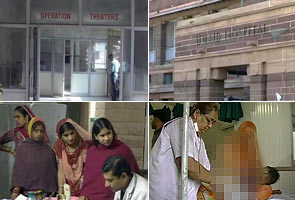
    • JODHPUR: Nearly four months after the "serial" deaths of 16 women in Jodhpur hospitals due to administration of contaminated IV fluid, much seems to have changed at the Umaid Hospital. Contamination apart, which the doctors claim to be beyond their control, the medical college administration has tried to improve the infrastructure right from the operation theatre (OT) to hygiene. READ MORE
  2. US Pharmaceutical Company Testing Drugs on India's Poor
    • U.S. pharmaceutical companies have moved their operations overseas in the past decade, testing their drugs on poor people in such lands as Russia, China, Brazil and Romania. It is a $30 billion business, and today around 105 countries are allowing such large corporations as Merck and AstraZeneca to conduct clinical trials on their soil. One country that has experienced a boom like no other in this industry is India, with its widely spoken English, an established medical infrastructure and welcoming attitudes towards foreign industry. Most importantly, these pharmaceutical companies are exploiting the country’s vast number of illiterate and poor people who are willing to become guinea pigs. READ MORE
  3. From Stretcher to Where ??
    • An emergency response today cannot be crafted in silos. Being prepared equally includes medical preparedness as large-scale attacks on urban, civilian populations have become all too frequent over the past decade. These incidents often result in what experts call “Hospital Multiple Casualty Incidents” (HMCI) which are very challenging to hospital teams.
      Faced with a catastrophe, our doctors and nurses are doing their best and saving many lives. But it should not be left to individual capability and commitment. The critical question: How geared is the “system” on the whole to deal with mass casualties? Last Wednesday’s blasts in Mumbai offered a stark example of the gaping hole between what ought to be and what is on this score: we saw many injured victims being bundled into trucks and taken to hospitals. The ambulances came later. READ MORE
  4. Consultants Blamed for poor training of Doctors !!
    • HOSPITAL CONSULTANTS have been blamed for the poor training of junior doctors by Wexford Fine Gael TD Liam Twomey. He said it would be generous of him to say his own training was only haphazard. “I can honestly say disaster was averted not because of excellent training or my expertise but because I was lucky and I had a good nurse beside me. That is not the way to train junior doctors.’’ READ MORE
  5. Africa : How Safe are the Herbal Medicine ??
    • The Herbal Medicine-Maker's Handbook: A Home Manual
    • From the beginning of time, traditional medicines have been used for both the prevention and cure of ailments that affect human health. They are sourced from leaves, the bark, seeds, sap and other parts of trees and weeds. Traditional medicines have been used to cure deadly ailments such as diabetes, cancer and ulcer. Most traditional medicines are consumed in their raw and semi-processed forms by Asians, Africans and Latin Americans. But over the years, countries like China and India have been able to refine and develop traditional drugs and are exporting them to Europe, America, Asia and Africa. Some of them make claims of being able to cure infertility, menstrual cramps, irregular cycles, ovarian cysts, uterine fibroids, hot flashes, arthritis, weak digestion and endometriosis. READ MORE
  6. Obesity Campaign a "Waste of Cash"
    • AN OBESE person's body is programmed to regain any weight that is lost and authorities are wasting money on campaigns urging people to exercise and eat healthy food, an obesity expert says. Joseph Proietto said the high failure rate of weight-loss programs could be explained by growing evidence that obesity was ''physiologically defended''. Read More
  7. Batlling Malaria in Africa.
    • When general practitioner John Lusingu returned to his native Tanzania to do research on malaria, he was met with a total lack of science infrastructure. Undeterred, he helped convert a former kitchen in the Korogwe District Hospital into a small malaria research laboratory in 2004, and launched a study of the infection in children. His efforts eventually led to a successful vaccine clinical trial as well as the erection of state-of-the-art malaria research centers. READ MORE

Regards


Hospital Administration Made Easy

Saturday, July 30

News Fast-Track :: Hospiad


This initiative is to archive the great news snippets from the web which are related to the Hospital Administration. There are many achievements happening in many corners of the world as well there are many issues deserving a good discussion.

This would be an simple effort to archive all the relevant information in one place, All the post will be labeled News-Track for easy tracking.

Dated: 30th July 2011, Saturday:

  1. India's Public Heath Crisis: Government Responds:
    • Governments acknowledgement in this regard is the first step in bridging the gap. Only 1% of the GDP is spent on the public health, and plans to double it to 2% in the Five year plan starting from 2012.
    • Poor State of Public Health  out lined in 2005 gave birth to National Rural Health Mission (NHRM). As most of the Indian population still resides in the rural areas.
    • Developing world problems such as infant mortality, malaria & tuberculosis is now accompanied with rich-man's disease such as diabetes and heart disease.
    • Public Health as it falls under the State, situations varies from state to state from good (in Gujrat) to Bad (in UP), main reasons being corruption, misuse of funds, and many other irregularity. 
    • Will monetizing the Child birth in the Hospital work in long run, when the infrastructure to handle patients is not in place.
  2.  Ailing Health of Growing Nation


India supplies doctors to hospitals the world over. Within India itself, a thriving private health-care industry; serving a growing middle class and the wealthy; is a byproduct of the nation's economic ascendancy.


"Click on the Title to Go to Original News-Article"


Regards


Hospital Administration Made Easy